In January 2011, Ross created Silk Road, the largest and most sophisticated online market for illegal drugs in history. Silk Road emerged as the most sophisticated and extensive criminal marketplace on the Internet, serving as a sprawling black-market bazaar where unlawful goods and services, including illegal drugs of virtually all varieties, were bought and sold regularly by the site’s users. Ulbricht built this black market bazaar to exploit the dark web and the digital currency Bitcoin to allow users to conduct illegal business beyond the reach of law enforcement. Attorney Preet Bharara described Silk Road as a meeting place for criminals hoping to "buy and sell illegal drugs and other illicit goods and services anonymously and outside the reach of law enforcement." In 2011, the FBI became aware of an online black-market website, Silk Road, where users could buy and sell goods, including illegal drugs and weapons — even murders for hire were discussed. The illegal marketplace was notorious for its security features of the dark internet.
The pair were careful to hide their true identities from eachother, but over time Nob became a trusted informant, and told Ulbricht if he ever needed some hired muscle he could seek him out. Now a millionaire many times over, the Ulbricht and DPR personas were growing more polarised by the day. By mid-2012, Silk Road had established itself as the biggest innovation the drug trade had seen in decades, and for DPR and the community around him, it was about more than just trading contraband – it was a movement. Some believed DPR, as he became known, had inherited the title from somebody else, while others speculated that the username was shared by a number of different people. Adopting the moniker of ‘Dread Pirate Roberts’, he used his newfound notoriety to preach his libertarian philosophy and became a cultlike figure amongst both the criminal underworld and libertarians alike. Silk Road is going to become a phenomenon and at least one person will tell me about it, unknowing that I was its creator.’
Ross Ulbricht
The site’s use of Tor and other technologies made it difficult for law enforcement to track down the site’s operators and users. The site made it easier for people to access illegal drugs and other illegal goods, which led to an increase in drug-related crimes and deaths. Silk Road grew quickly, becoming a marketplace for all kinds of drugs, including weed, cocaine, LSD, ecstasy, and heroin. Silk Road was an online marketplace that facilitated the trade in narcotics and other illegal products and services.
For a brief time, from 2011 to 2013, it was a wild success. Over the past few months he had been handling customer service for the massive online enterprise called Silk Road. Green considered the package and then took it into his kitchen, where he tore it open with scissors, sending up a plume of white powder that covered his face and numbed his tongue. To get around he sometimes borrowed his wife’s pink cane. In conclusion, as we continue to explore the depths and intricacies of the internet, the legacy of the Silk Road remains an important reminder of the potential dangers that lurk beneath the surface. The seized cryptocurrency was worth approximately $1 billion at the time of the transfer.
November 2011: Undercover Operatives Begin Communicating With Ross Ulbricht
They also argued the evidence against Ulbricht was circumstantial, and that the government had violated his Fourth Amendment rights by conducting warrantless searches of his laptop and other devices. In an effort to combat the flurry of evidence against him, Ulbricht’s defense team argued that Ross was not the sole operator of Silk Road, that he handed control of the site over to others. They found a journal on Ross’s computer stating he wanted “to create a website where people could buy anything anonymously, with no trail whatsoever that could lead back to them.” Adding to the extensive collateral damage from Silk Road, Carl was eventually caught, convicted on extortion, money laundering, and obstruction of justice, and sentenced to 78 months in prison. In a bizarre turn of events, however, agent Force attempted to extort money from Ulbricht by threatening to reveal his identity.
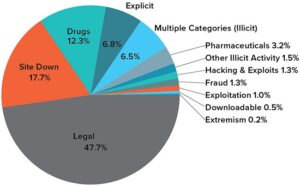
Many people believe that the first illegal marketplace will become active again. That is why this marketplace paved the way for other websites that are now selling similar drugs on the dark web. More than 70% of the goods that were present on this black marketplace were drugs when the site was active.
During the second week of the trial, prosecutors presented documents and chat logs from Ulbricht’s seized computer that, they said, showed how Ulbricht had administered it for many months, which denied the defense’s claim that Ulbricht had relinquished control of the site. Another 144,342 bitcoins which had been found on Ulbricht’s computer were kept, roughly $87 million. It noted that “From February 6, 2011, to July 23, 2013, in two years there were approximately 1,229,465 transactions performed on the site. The FBI announced that it had grabbed 144,000 bitcoins belonged to Ulbricht, worth $28.5 million in October 2013.
—but the administrator pronounced “a strict code of conduct.” No child porn, stolen goods, or fake degrees. Some of Silk Road’s users were purists who advocated for full transactional autonomy—if heroin, why not howitzers and human hearts? Sitting across from Jessica, he wished he could be honest; he also wished he’d started with a better lie. Just before New Year’s he went on a date with a woman named Jessica; he told her, like everyone else, that he was working on a bitcoin exchange. “It was time to bring in some hired guns,” he wrote, “to … take the site to the next level.”
Dread Pirate Roberts Is Born
While the concept of the dark web is as old as the internet itself, it was the emergence of private browsers like Tor in the late 2000s that fueled the wild adoption of such a radical approach of connecting to the internet. Here, jurisdictional laws do not apply nor are governments’ surveillance operations a threat. In most cases, these service providers are mandated under the law to provide regulators with unlimited access to such data. In this piece, we will take a closer look at the emergence of the dark side of the internet and how Bitcoin was caught in its web.
- As Silk Road grew, so did the stakes and the paranoia of its operators.
- Proponents of Silk Road argue that it provided a safer alternative to street-level drug transactions, raising questions about the effectiveness of current drug policies.
- His breakthrough came in 2010 with the advent of bitcoin and cryptocurrencies, which Ulbricht saw as a way to decouple commerce from government intervention and taxation.
- When you buy or sell illegal goods online, you are not hidden from law enforcement, Europol’s director emphasized after a Dream Market bust.
- So next time you want to make an illegal purchase using cryptocurrency on the dark net, you might want to think again.
The site operated on a hidden part of the internet called the dark web, where users can buy and sell anything anonymously, with no trail leading back to them. Investigators went after Silk Road’s other employees and users. He’d been caught red-handed, and investigators had connected the digital and physical worlds, unmistakably linking Ulbricht, the Eagle Scout, to DPR, the underworld kingpin. On Ulbricht’s day in court, his defense attorneys attacked the fragility of the matching online identities. By the time Ulbricht realized that everyone involved in this scene—the new employee, the arguing couple, the woman across from him, the man walking by—were all undercover agents, he was already in handcuffs.
What Exactly Is The Dark-web Black Market Silk Road
This regulatory awakening would ultimately reshape the entire cryptocurrency industry, pushing exchanges toward compliance regimes that eliminated much of the anonymity that had originally attracted users to digital currencies. The platform's commission structure meant that users paid for the privilege of accessing both the marketplace and its integrated money laundering services. Ulbricht was also ordered to pay about $183 million in restitution, based on the total sales of illegal drugs and counterfeit IDs through Silk Road. Ulbricht's trial in early 2015 was a watershed moment for both cryptocurrency law enforcement and the broader understanding of digital financial crimes. Perhaps most bizarrely, Force was simultaneously working as the chief compliance officer for CoinMKT, a digital currency exchange, while serving as a federal drug enforcement agent.
Risks Associated With The Silk Road Dark Web
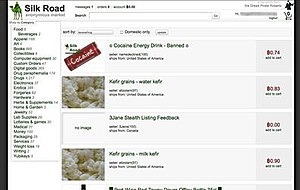
But even these may be gone by the time you read this, as many darknet marketplaces pop up and disappear quickly — along with the cryptocurrency and data belonging to their customers — in what is known as an “exit scam.” Several darknet marketplaces currently exist that follow the Silk Road model, allowing anonymous cryptocurrency transactions on websites only accessible through dark web browsers. The Silk Road website sold mainly drugs (illegal narcotics, prescription medication), illicit goods (forged documents, pirated media), and some legitimate goods (books, apparel, services).
My Account
That oversight exposed him, and a tax agent identified him in 2011, which led to the seizure of his laptop and Silk Road crypto as well as his eventual arrest and subsequent life sentence. The final nail in the coffin was when Ulbricht used the same online account to talk about the Silk Road website and to post a job listing with his email address. While its legacy is controversial, it remains a critical case study in the evolution of darknet markets. While the dark web isn't inherently illegal, it is rife with scams, malware, and illegal activity. Silk Road's shutdown paved the way for new dark web markets, each learning from its predecessor's shortcomings.
How Did The Darknet Silk Road Work?
Soon Green was being dunked in the bathtub of a Marriott suite by phony thugs who were in fact a Secret Service agent and a Baltimore postal inspector. Force got Green to sign a waiver, thereby commencing his role in an impromptu staged torture sting against DPR. Then he looked across the table, where at that very moment Green was half-asleep. “This will be the first time I have had to call on my muscle,” he told Inigo. Moreover, he got a message from another employee, Inigo, that $350,000 in bitcoins had just disappeared from various accounts.
In practice, no market in the past decade has survived indefinitely. See our guides on Dark Web Monitoring Tools for how companies watch for leaked info. Vendors now vet markets for trustworthiness, often requiring invites or deposits. Even Hydra’s 2022 fall led to smaller Russian language markets trying to fill the gap, some suspected ones being Abacus or Drughub. Dark web takedowns now often involve multiple ops in concert see the how Law Enforcement Tracks Criminals On The Dark Web that orgs use to stay alert.
Other sites already existed when Silk Road was shut down and The Guardian predicted that these would take over the market that Silk Road previously dominated. The Farmer's Market was a Tor site similar to Silk Road, but which did not use bitcoins. Any changes in the price of bitcoins during transit were covered by Dread Pirate Roberts. It was subsequently revealed that the transfer had been made by the United States government in a civil forfeiture action. Australian police and the DEA have targeted Silk Road users and made arrests, albeit with limited success at reaching convictions.
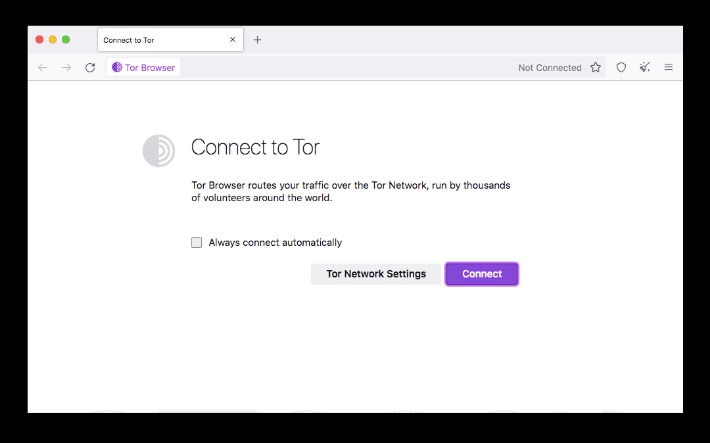
The online Silk Road officially ended in October 2013, and the 2.0. Shoppers could find nearly any good or service — legal or illegal — as long as the intended purpose wasn’t to harm or defraud. The Silk Road black market could only be accessed by buyers and sellers using the Tor web browser and a compatible search engine.
It was the first time Ross Ulbricht's name had come up in the case. Like all of the investigators, Alford was determined to find the person behind Dread Pirate Roberts – so he used Google's advanced search option for the earliest mentions of Silk Road. By now Homeland Security agent Jared Der-Yeghiayan had made 3,600 drug seizures. That led them to an internet café in San Francisco. It would be a game changer — investigators discovered the location of the server hosting the website 2,700 miles away in Iceland.