
In China, the government’s recognition on infrastructure development, less costly housing, and concrete growth has caused a high consumption of concrete blocks and bricks. Asia pacific dominates the concrete block and brick market share due to numerous key factors. Innovation in product design substantially boosts the concrete blocks and bricks market growth through improving their functionality and enchantment. Some of the different types of bricks available in the market are clay bricks, concrete bricks, sand-lime bricks, and fly-ash bricks.
- Additionally, governments in the region are developing and building smart cities, enhancing the demand for bricks as these bricks are used to construct roads, highways, residential houses, commercial spaces, schools, and others.
- Browse the stalls that line the beautiful narrow cobbled street.
- Clay bricks dominated the brick market with 65% of revenue in 2024, yet fly-ash bricks record a 3.22% CAGR through 2030, widening their presence in regions tightening carbon rules.
- In March of 1928, John Nicholas Brown II’s proposal to take over the lease of Old City Hall and restore the building was accepted by the city.
- Governments and developers press towards energy-efficient construction methods and, therefore, increase demand for bricks with higher insulation and lower carbon emission.
Take The Bus: Boston To Newport

Geographical analysis of the global brick market shows different regional dynamics driven by economic, regulatory, and environmental factors. Also, regional regulatory policies and building codes will significantly contribute towards changing the market scenario and encouraging the adoption of green building materials such as bricks. Regional segmentation in the brick market is important to understand the global dynamics. Bricks are one of the most important building materials in the global market and hold an essential place for construction in every sector. In the dynamic flow of global construction materials, bricks emerge at the core because of their durability, versatility, and sustainability.
Welcome To The Brick Market
The other major application of bricks is in the formation of paths and pavements. This application is vital in both the urban and rural areas where bricks are most preferred due to their strength and thermal insulation. The largest category in this regard is jumbo bricks, designed to achieve larger coverage per unit. Modular bricks are heavily used in extensive work where time and cost-to-benefit ratios matter the most. The dimensions of these bricks measure 3⅝ inches high, 2¾ inches deep, and 7⅝ inches long.
Digital modeling and automated production are making a leap in the brick manufacturing process, improving quality control and cost efficiency. Other brick innovations include interlocking designs for more rapid assembly and lighter types for seismic regions attributed to improving overall structural performance. Therefore, the schemes on affordable housing and other urban infrastructural projects with major investments are the factors that will spur demand to a large extent in the near future. Economic volatility or other geopolitical factors can exacerbate the foregoing challenges and impact market dynamics in an unpredictable way. Increasing population propels further urbanization, which supports the need for affordable housing and infrastructure.
Application Segment Analysis
The sudden rise in CAGR is attributable to the market’s increase and demand returning to pre pandemic levels once the pandemic is over. The COVID-19 pandemic has been unprecedented and staggering, with market increases experiencing higher than anticipated demand across all regions compared to pre pandemic levels. Overall, the market is poised for consistent increase, pushed via construction needs and technological improvements.

Naturally, if weaknesses are found, it is the strengths and innovations within the market that drive growth in the brick market. The brick market presents a lot of promise with the emergence of economies that are rapidly industrializing and developing the necessary infrastructure. The evolving consumer preferences and regulatory frameworks are also indicative of future landscapes that may take place within the global brick market.
- The Concrete Block and Brick Market is an important phase of the global construction enterprise, driven by using the growing call for durable and value-powerful constructing materials.
- Calcium-silicate units consume 241 kWh/t of primary energy versus higher values for traditional clay, appealing to designers seeking certification under the UK Net Zero Carbon Buildings Standard.
- Bricks are used for the reconstruction & repair of infrastructure as they are weather and age-proof and are able to withstand even the harshest conditions, from cyclones and severe marine environments to wildfire-prone areas.
- Our dedication to supplying superior building materials is matched by our commitment to forging lasting relationships with our clients and partners.
- Asia Pacific accounted for a major share of the market in 2022 due to the increasing population, rapid urbanization, and infrastructure development.
Now that we’ve taken a look into the different markets Brick Lane has to offer, let’s take a look at what you’ll find in and out of the stalls. As the name implies, the Tea Rooms is a market that was named for its large selection of coffees, teas, and traditional baked goods. There’s an eclectic mix of food stalls offering innovative Brick Lane street foods, fresh produce, desserts, and more. Brick Lane Market London has several indoor markets under its umbrella. Take a look at some incredible things you can find in this bustling, diverse market.
Bricks Market Growth Factors
Architectural innovation is creating significant opportunities in the bricks market by redefining traditional construction practices. The ongoing urbanization trajectory is, therefore, a pivotal factor propelling sustained growth in the bricks market, aligning with the dynamic needs of modern urban development. Moreover, the trend towards vertical urbanization, seen in the construction of high-rise buildings, further amplifies the reliance on bricks as a fundamental construction material. Modern construction techniques incorporate innovative materials, such as interlocking bricks or those made from recycled materials, to enhance sustainability. If you ever wonder how to get to Brick Lane Market by tube or what is the nearest tube to brick lane market? We’re more than a brick manufacturer, we’re your trusted neighbor in the construction industry.
The residential buildings segment held a large share of the market in 2022 due to the economic expansion and growing middle class and working population. Additionally, these bricks reduce construction time as they are lightweight and easy to easy-to-use design. Clay bricks are durable, reusable, free from contaminants, and naturally resistant to pests or fire, which makes them suitable for building houses. Increasing government expenditure for reconstruction & repair of infrastructureis expected to drive the market. The increased severity of COVID-19 infection encouraged governments to impose nationwide lockdowns, which created a shortage of workers and raw materials, hindering the production of bricks.
Moreover, supportive government initiatives, coupled with a rising population, contribute to sustained growth. The infrastructure segment is anticipated to expand fastest over the projected period. The modular segment is anticipated to witness rapid growth over the projected period. Common sizes include modular (7 5/8 x 3 5/8 x 2 1/4 inches), queen (7 5/8 x 2 3/4 x 2 3/4 inches), and king (9 x 2 5/8 x 2 3/4 inches). The concrete segment is anticipated to expand at a significant CAGR of 4.1% during the projected period.
Besides, an attractive aesthetic appearance is appreciated by all, right from residential structures to commercial ones. One of the driving factors for using brick is its capacity to sustain harsh weather conditions and provide high structural efficiencies. Global Brick market is estimated to reach $2,150,951.24 Million by 2031; growing at a CAGR of 3.1% from 2024 to 2031. Of course, that evolution marks all the more the resilience and adaptability true to this market and its relevance in a very dynamic and increasingly eco-conscious world. Bricks, by their very nature, have taken on a significant role in building structures for centuries and remain an essential element of architectural landscapes worldwide. Executed hundreds of consulting projects in various markets since 1998.
From one-of-a-kind gifts to delectable culinary delights, this bustling marketplace is the perfect place to explore and indulge in Newport's vibrant atmosphere. For physically and mentally demanding treks, try one of these famous Virginia hiking trails. Or, stop by the Facebook page of this market in Newport, Rhode Island.
Brick Market Size And Share
Regarding the rise in urbanization across the world, demands for fast construction materials continue to move upward. This includes fly ash clay bricks, made from industrial waste products like fly ash, which not only reuses waste but also imparts superb strength and integrity to the structure. Sand lime bricks, which have incorporation of lime and sand, enhance durability and preferably used in locations demanding strength against moisture and chemicals.
Brick Market Place Condominium Association
Additionally, bricks are used as an alternative to stones for construction purposes. Fly-ash bricks utilize industrial waste and cut firing energy, aligning with green-building codes and helping meet aggressive emissions-reduction targets. Scandinavia’s public-procurement policies stipulate embodied-carbon ceilings, channeling orders toward calcium-silicate or unfired concrete bricks.
Additionally, stringent building regulations promoting durability and thermal insulation contribute to increased brick usage. They are also focusing on the development of eco-friendly bricks. This is driving the development of modern brick manufacturing plants to develop high-quality clay facilities. This trend is particularly notable as governments invest in extensive infrastructure initiatives to support economic growth and urban development.
Modular builders require lightweight, high-strength hollow bricks that integrate with panelized frames. Concrete bricks that bypass firing processes can save 2.4 tonnes of CO₂ per house and become net absorbers over their lifecycle. Governments are increasing social-housing budgets to narrow deficits—India alone recorded an 18.7-million-unit gap in 2024, while Indonesia tallied 12.5 million units, each amplifying baseline need for bricks.
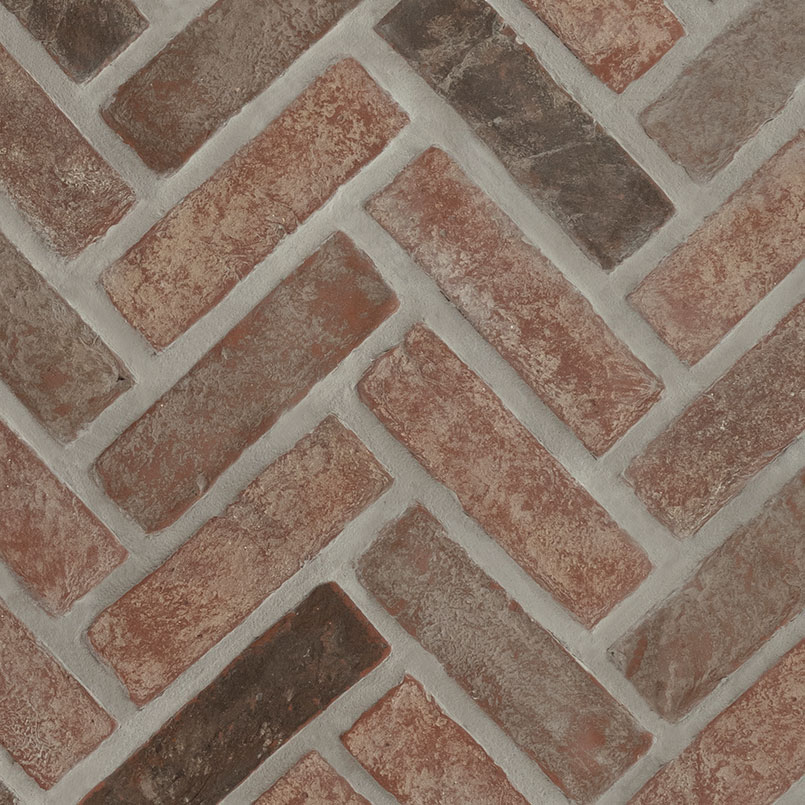
Middle East and Africa, although smaller today, hold the loftiest upside as 70% of buildings required by 2040 are yet to be built. Brazil accelerates industrial parks along new highways, increasing demand for large-format blocks that reduce lay-rate time. Eastern Europe builds capacity to serve domestic and German markets facing material tightness. Europe trails in growth but leads innovation as the CBAM exposes carbon-intensive imports and rewards local low-carbon pioneers. Producers deploy tunnel kilns with waste-heat recovery to meet provincial emission caps and reduce coal dependence, safeguarding supply resiliency during demand spikes.

Helping clients grow through game changer ideas, robust market and unmet needs analysis. Request the impact of COVID-19 on your product or industry Overall, it offers valuable and comprehensive insights into the market dynamics in a formal and easily understandable manner.