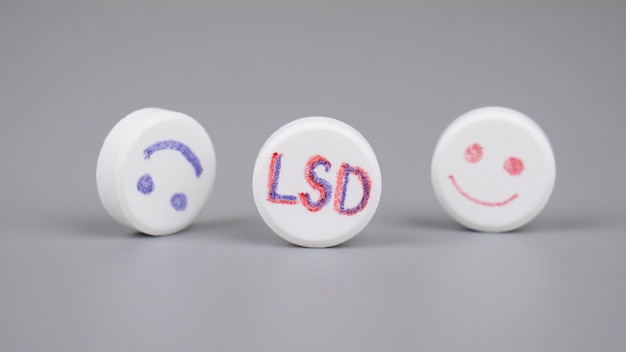
In most cases, while a bad trip may make you feel anxious or frightened, the effects of the LSD are typically not life-threatening and will wear off over time. The effects of LSD usually kick in within the first minutes and can last about 8-12 hours. When you take LSD, it reacts with these receptors to trigger the hallucinogenic effects within your senses. What researchers do know is that LSD attaches to serotonin receptors on your brain cells.
Notable Individuals
Shortly thereafter, it was found that LSD showed serotonin-like effects and could antagonize serotonin in certain assays. NBOMe psychedelics such as 25I-NBOMe, derived from structural modification of 2C psychedelics, were first described by Ralf Heim and colleagues by 2000. American chemist David E. Nichols has developed numerous novel psychedelics and entactogens from the 1970s to present. Starting in the 1960s, Shulgin synthesized and gradually described hundreds of novel synthetic psychedelics as well as entactogens in scientific publications and published books such as PiHKAL (1991) and TiHKAL (1997). This experience has been described as "the most consequential mescaline trip of the sixties", as it caused Shulgin to redirect his focus and life's work to psychedelic chemistry.
Other Drugs
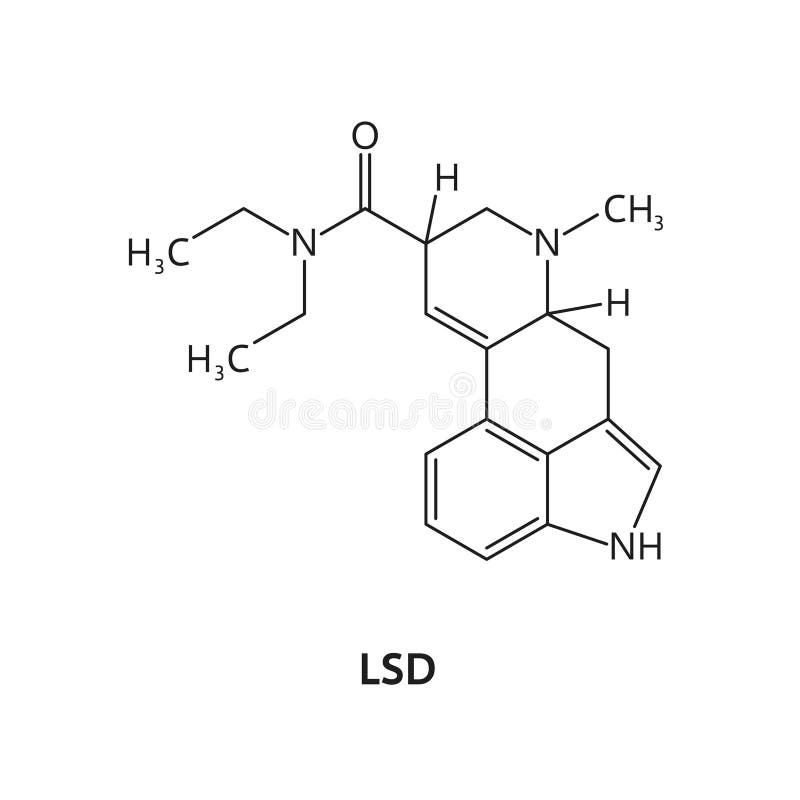
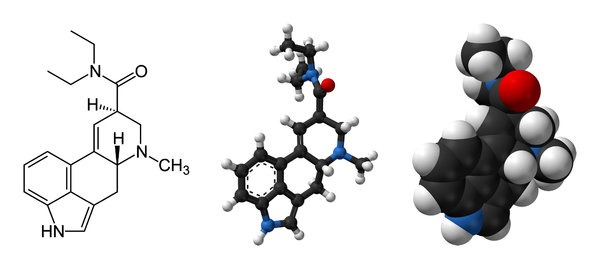
Since the Middle Ages, controlled doses of ergot were used to induce abortions and to stop maternal bleeding after childbirth. Ergot alkaloids have a wide range of biological activities including effects on circulation and neurotransmission. The ergot sclerotium contains high concentrations (up to 2% of dry mass) of the alkaloid ergotamine, a complex molecule consisting of a tripeptide-derived cyclol-lactam ring connected via amide linkage to a lysergic acid (ergoline) moiety, and other alkaloids of the ergoline group that are biosynthesized by the fungus. The drug is said to have become a popular psychedelic drug and alternative to other lysergamides like LSD following its initial emergence. In addition, the conformation of LSD within the crystal structure of the closely related serotonin 5-HT2B receptor was later found to be essentially superimposable with the structure of LA-SS-Az. It was developed to help better understand the binding orientation of LSD at the serotonin 5-HT2A receptor and to help further map the topography of the receptor.
The researchers eventually concluded that LSD's effects were too varied and uncontrollable to make it of any practical use as a truth drug, and the project moved on to other substances. His studies focused on drug abuse in the former Soviet Union, where he theorized that the booming black market and many unemployed chemists could lead to a flood of the drug market. Cohen published 13 books in his life, all of them based on drugs and substance abuse. He frequently entertained friends and many others with parties he called "Acid Tests" involving music (such as Kesey's favorite band, The Warlocks, later known as the Grateful Dead), black lights, fluorescent paint, strobes and other "psychedelic" effects, and, of course, LSD. Many of the other faculty members had harbored reservations about Leary's research, and parents began complaining to the university about Leary's distribution of hallucinogenic drugs to their children. Leary claimed that using LSD with the right dosage, set (one's emotional mindset at time of ingestion), and setting, preferably with the guidance of professionals, could alter behavior in dramatic and beneficial ways.
LSD is a serotonergic psychedelic and acts as a non-selective serotonin receptor modulator. Although LSD is relatively safe in overdose, 25-NB (NBOMe) psychedelics like 25I-NBOMe and 25B-NBOMe are often sold as "LSD" and are highly toxic in overdose, with many reported severe intoxications and deaths. It is estimated, based on animal studies and human case reports, that the lethal dose of LSD in humans is approximately 100 mg, or about 1,000 times the usual recreational dose of 100 μg.
Some research has found that psychedelics can help treat mental disorders such as obsessive-compulsive disorder, post-traumatic stress disorder, alcoholism, depression, and cluster headaches. More than half of psychiatrists in the 2023 study expressed intentions to incorporate psychedelic therapy into their practice if regulatory approval is granted. Despite broad prohibition, unofficial psychedelic research and therapeutic sessions continued nevertheless in the following decades. LSD and many other psychedelics were placed into the most restrictive "Schedule I" category by the United States Drug Enforcement Administration. Studies on medicinal applications of psychedelics ceased entirely in the United States when the Controlled Substances Act was passed in 1970. The essay argues that individuals in government and the pharmaceutical industry sabotaged the psychedelic research community by canceling ongoing studies and analysis while labeling genuine scientists as charlatans.
Possible Death
These psychedelics have perceptible psychedelic effects at minimum doses of 10 to 20 μg for LSD, 3 to 5 mg psilocybin, 0.5 g psilocybin-containing mushrooms, and 100 mg mescaline. Psychedelic microdosing is a form of drug microdosing in which sub-hallucinogenic doses of serotonergic psychedelics like LSD and psilocybin are taken for claimed cognitive and emotional benefits. LSD and other drugs in this class are thought to produce psychedelic experiences through their interaction with these receptors, especially the 5-HT2A receptor.

"Stacks"—Single, Double, Triple Etc
The drug enhances dopamine D2 receptor protomer recognition and signaling of D2–5-HT2A receptor complexes, which may contribute to its psychotropic effects. Many but not all serotonin 5-HT2A agonists are psychedelics and serotonin 5-HT2A antagonists block the psychedelic activity of LSD. The psychedelic effects of LSD are attributed to activation of 5-HT2A receptors. In humans, recreational doses of LSD may affect 5-HT1A, 5-HT2A, 5-HT2B, 5-HT2C, 5-HT5A, and 5-HT6 receptors. However, a role of other serotonin receptors and targets in the effects of LSD cannot be ruled out and may be considered likely.
After Effects
However, these initial reports were based on in vitro studies or were poorly controlled and have not been substantiated. Beginning in 1967, studies raised concerns that LSD might produce genetic damage or developmental abnormalities in fetuses. There is an urban legend that a person who has used LSD more than seven times is automatically declared legally insane. Therefore, there is no plausible motivation for a drug dealer to distribute LSD in this manner. The flyer lists an inaccurate description of the effects of LSD, some attribution (typically to a well-regarded hospital or a vaguely specified "adviser to the president"), and instructs parents to contact police if they come across the blue star tattoos.
Hallucinogen-perception Persisting Disorder (HPPD)
There has been a dramatic increase in interest in psychedelic microdosing as well as scientific research into the practice since 2018. James Fadiman was responsible for introducing the modern paradigm and phenomenon of psychedelic microdosing, which had previously been largely unknown, with his 2011 book The Psychedelic Explorer's Guide. A microdose is considered to be between approximately one-twentieth to one-tenth of a typical recreational dose. In people with major depressive disorder, placebos are known to produce substantial reductions in depressive symptoms all on their own and conventional antidepressants barely outperform placebos in clinical trials. LSD microdosing is being clinically studied in the treatment of Alzheimer's disease for its anti-inflammatory effects.
These misconceptions include misinformation about adulterants or other black market issues, as well as alleged effects of the pure substances. Britain was also investigating the possible use of LSD and the chemical BZ (3-quinuclidinyl benzilate) as nonlethal battlefield drug-weapons. In the same period, the US Army undertook the secret Edgewood Arsenal human experiments which grew out of the U.S. chemical warfare program and involved studies of several hundred volunteer test subjects. Records indicate that in 1611, in the British Jamestown Colony of Virginia, an unidentified, but toxic and hallucinogenic, drug derived from local plants was deployed with some success against the white settlers by Chief Powhatan.
- It is rumored that this is the cause of the severe adverse effects that have been observed, but the seeds, themselves, contain toxins, specifically glycoresins and ergoclavines.
- Hundreds of participants, including CIA agents, government employees, military personnel, prostitutes, members of the general public, and mental patients were given LSD, many without their knowledge or consent.
- We saw ourselves as anthropologists from the 21st century inhabiting a time module set somewhere in the dark ages of the 1960s.
- Besides public research, it was eventually learned that the United States government had also conducted research into psychedelics, as possible mind-control and truth-serum drugs, in the 1940s through the 1970s, for instance Project MKUltra by the Central Intelligence Agency (CIA) and the Edgewood Arsenal research by the U.S.
- Liquid LSD is uncommon and is generally (but not always) diluted to ensure that 1 drop equals 1 dose.
Some of the drugs included in this class are the ubiquitous LSD, the less well-known but very powerful drug DMT, the active chemical in psychedelic mushrooms psilocybin, and a host of other drugs. It is widely accepted that set and setting are the most important determinant of experiences with psychedelics, while the drug only plays the role of a catalyst or trigger. A 2006 study by McLean researchers interviewed 53 cluster headache sufferers who treated themselves with either LSD or psilocin, finding that a majority of users of either drug reported beneficial effects. Compared to some other psychedelics such as psilocybin mushrooms, LSA, and ayahuasca, LSD is reported to be more stimulating and fast-paced in its physical and cognitive effects. According to various studies, LSD acts as a partial agonist at most serotonin receptor subtypes, including the 5-HT1A, 5-HT2A, 5-HT2B, 5-HT2C and 5-HT6 receptors, with high affinities.
How Long Does An LSD Trip Last?
"In the fourth and fifth study periods, however, they appeared to be sufferingly exhausted and even sleepy and dazed." isoergine In addition, it was assessed in two clinical studies by other researchers. Sleepy grass (Achnatherum robustum) and Claviceps paspali (ergot) have similar ergoline constituents as morning glory seeds and have also been used to produce psychoactive effects, albeit rarely. Per Shulgin in his 1997 book TiHKAL (Tryptamines I Have Known and Loved) however, both ergine and isoergine are "probably correctly dismissed" as not contributing to the effects of morning glory seeds. Hofmann also stated that ergine was 10- to 40-fold less potent than LSD and that it had qualitatively different effects. Based on the preceding studies, Alexander Shulgin describes pure ergine as having a dosage of 0.5 to 1 mg and being 10-fold less potent than LSD, but as being "not hallucinogenic".
According to writer Dennis McDougal, in the summer of 1997, Skinner dosed his children's babysitter with blotter acid (a method of taking LSD). The DEA claimed they led the local drug market for marijuana (including hashish) and cocaine. According to testimony Skinner later gave in court, he tried over 163 types of drugs in his life. Skinner grew up in Tulsa, Oklahoma, and started manufacturing various drugs in high school.

William Leonard Pickard
On January 19, 1973 "Leland H. Jordan" (later identified as Sand) and Judy Neal Shaughnessy were arrested on drug charges by Kirkwood, Missouri, police, shortly after they arrived from San Francisco. During this time Sand also began synthesizing DMT in his bathtub, and he is credited with being the first to discover that it was active when volatilized (smoked). Sand became interested in the teachings of George Gurdjieff, the study of different cultures, and various Eastern philosophers. Nicholas Sand (born Nicholas Francis Hiskey; May 10, 1941 – April 24, 2017) was a cult figure known in the psychedelic community for his work as a clandestine chemist from 1966 to 1996 for the Brotherhood of Eternal Love. In January 2004, Skinner was sentenced to four years in prison, and ordered to complete 250 hours of community service.