While it doesn’t index dark web content, it’s the default search engine on the Tor Browser because of its strong privacy features and lack of tracking. Venus crawls and gathers a wide array of onion sites, ensuring you have access to the latest information available on the dark web. While Tordex aims to provide unrestricted access to dark web content, you should exercise caution as the lack of censorship may lead to exposure to sensitive or illegal material. It allows you to suggest new onion sites for indexing and provides a unique feature displaying the last 5 public searches, offering insight into popular trends on the dark web.
These sites are intentionally hidden to protect the privacy and anonymity of both the site operators and visitors. The dark web consists of websites that use encrypted .onion domains, which require specific software and protocols to access. No, conventional search engines like Google cannot be used to access the dark web. Unlike traditional search engines, it organizes dark web links into specific sections, making it easier to navigate and explore different parts of the dark web. As a result, Torch is often considered one of the leading dark web search engines. But there's a twist—it is one of the few dark web search engines that is available on the regular web.
- Tor adds a layer of anonymity, which helps dark websites remain hidden and prevents conventional search engines from indexing them.
- Tor Browser prevents someone watching your connection from knowing what websites you visit.
- In this guide, you’ll find the top 9 dark web search engines, complete with .onion links.
- Each search engine opens the door to potentially harmful content, making caution a necessity.
- It is widely regarded as one of the best private search engines and serves as the default search engine in the Tor browser.
Best Dark Web Sites: Unseen Onion And Tor Links

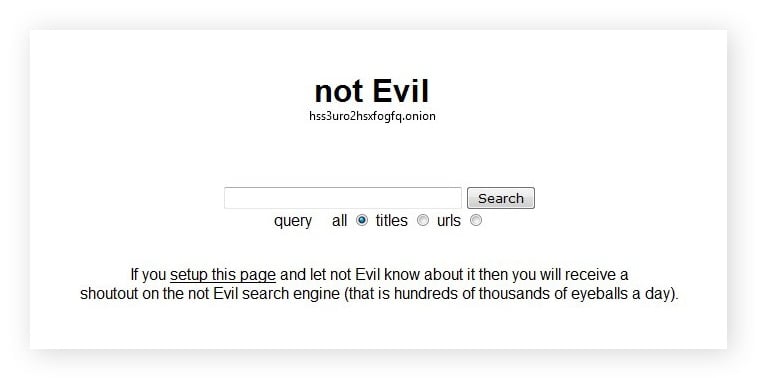
Some of the deep web sites do not use standard top-level domains (TLD) such as .gov, .com, .net, etc. As such, we do not recommend using Tor if you want to do data-intensive activities like streaming in HD, gaming, torrenting, or making video calls. This way, you can protect yourself from websites that want to steal your login details or cryptocurrency. Other options include Ahmia and NotEvil, which focus on listing .onion links.
Is Forest VPN Recommended For Dark Web Browsing?
Less known than Ahmia or Haystak, it’s a favorite among users who value accuracy and minimal clutter, particularly for technical or research-driven queries. Launched around 2020, DeepSearch is an open-source dark web search engine that prioritizes precision over volume. In 2025, I used Haystak to find a historical .onion archive of a defunct hacking forum for a cybersecurity report.
Whether you're conducting investigations, browsing anonymously, or exploring cyber threat landscapes, the tools above can help you safely navigate 2025’s ever-evolving darknet. Useful for public threat research, though limited in index depth. Unique in that it can be accessed via the clearnet (not just Tor). Cybersecurity teams and law enforcement agencies use it for investigations.
DeepSearch
With a database comprising data from over 40 marketplaces, 23,000 vendors, and featuring more than 1.3 million reviews, Recon offers an unparalleled depth of information. Primarily favored by individuals interested in procuring illicit goods and services from Dark web markets, Candle provides a straightforward and minimalistic user interface. Users play a crucial role in shaping the platform, reporting abusive or inappropriate content to ensure a safe and relevant browsing experience. While the basic version may display occasional static ads unrelated to search results, they do not impede functionality.
- It’s technically not a dark web search engine but is still a useful tool to navigate the dark web and find sites more easily based on categories.
- This ensures that users can search anonymously without fear of their data being compromised.
- It doesn’t offer advanced filters or features designed for deep navigation through .onion pages.
- This highlights that exploit and RaaS activity is nearly pervasive among markets indexed by search tools and directories.
- For example, randomly clicking a link can land you in extreme content, such as child pornography, which is a serious criminal offense to access.
- Built in 2019 by anonymous activists, Excavator would be an extremely deep digger into the onion content, trying to be open for everything.
State-sponsored Threat Actors
It’s great as a first step for new users who don’t know what to search for. It provides a structured and indexed list of sites, which can be easier to navigate than a search engine. Once you find one (as in this case with OnionWiki), it provides curated access to the rest of the dark web – you can use it similarly to a search engine. DuckDuckGo is primarily recognized as a privacy-conscious search engine on the surface web, but it also has a .onion counterpart, which is a great tool for dark web browsing. One of the biggest and most comprehensive databases of .onion sites. Because of OnionLinks’s age and size, it is valuable for veteran users to find elusive or hard-to-find sites.
Individual sites on the dark web look much like they do on the regular web, though a lot of them are a bit more rough around the edges. These typically come with ".onion" after them, rather than something like ".com" as on the standard web. Cybersecurity has to also cover everything physically on your computer too—which law enforcement or government authorities might have the right to seize if they come calling. Bear in mind too, that your internet provider will be able to see you connecting to Tor nodes, even if it doesn't know exactly what you're doing. Even with Tor and onion routing in place though, you're not suddenly completely invisible and free to do whatever you want, without repercussions.
What Is The Safest Dark Web Search Engine To Use?
Users can filter searches to focus on a single network or see blended results. Queries frequently return broken .onion links or irrelevant listings. DeepSearch is an open-source search engine known for its simple interface. DarkSearch is ideal for organizations looking to integrate dark web monitoring directly into their security operations. This system is designed to blend wide visibility with user-driven filtering, keeping the search results manageable. It provides access to hidden services through both a standard web interface and a free API.
Tips To Safely Search The Dark Web
Unlike many dark web search engines, Ahmia is accessible on both the surface web and Tor, allowing broader access to its indexed content. Finding data on the dark web can be challenging, in this post we’ll cover how the dark web works, how to access it, and the top 5 dark web search engines. The Directory of Open Access Journals is a deep internet search engine that provides access to academic papers. Unlike Google, Pipl can interact with searchable databases, member directories, court records, and other deep internet search content to offer you a detailed snapshot of a person. Some of the best dark web websites are just versions of regular sites, but are hidden to enable users in totalitarian regimes to access them.
The premium version provides advanced search features and alerts for new content, making it a powerful tool for deep web exploration. Torch is one of the oldest and most reliable search engines on the dark web. Dark web search engines don’t operate like Google. When you access these sites, your data is encrypted and passed through several nodes, making it difficult to trace back to you. Widely considered one of the best private search engines, it’s the default search engine on Tor browser.
The result is an entirely separate ecosystem of data that's invisible to the clear web. For businesses and cybersecurity professionals, however, they are a critical instrument. For the casual user, navigating this space is fraught with risk. Yet some of today’s biggest risks—such as data breaches, identity theft, and corporate espionage—often originate on the dark web. However, for business leaders and security professionals, ignoring this part of the web is no longer an option.
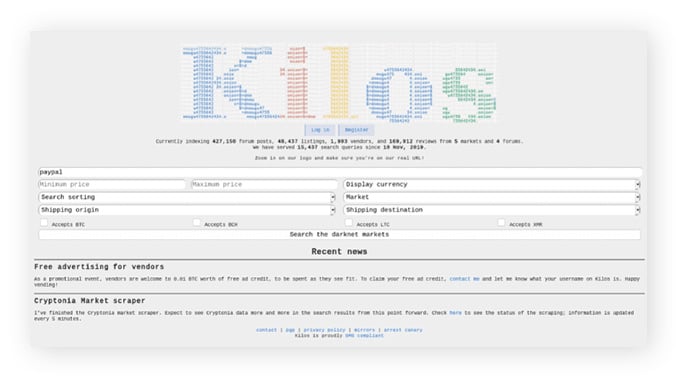
Is It Safe To Use Darknet Market Links?
The free version is a straightforward search tool. Torch also provides very little context for its search results and offers no real filtering, making it highly inefficient for targeted searches. Its indexing, while broad, is not always reliable, often returning outdated or broken links. Its primary differentiator is a "safety-first" policy. + Simple, categorized list of well-known sites
This area has turned to be a dependent source for years of journalists, researchers, and privacy-centric users who trust on anonymous networks like Tor and the principle of onion routing. Some of the best dark web search engines include Torch, DuckDuckGo, Ahmia, and Candle. The dark web is a part of the internet not indexed by traditional search engines like Google.
To get the full potential of SearXNG, especially for deep web content, use the Tor browser. The main reason many people opt for it is that SearXNG does not keep any user data, meaning you can browse the web privately without being traced. SearXNG is a powerful metasearch engine appealing to privacy-conscious individuals.
However, a follow-up search for “privacy forum onion” included a questionable link to a marketplace, which I avoided after checking r/onions. Its categorized structure is a godsend for quick access to trusted services like email or file-sharing, and its V3 focus aligns with modern security standards. While it lacks keyword search, its clean design and focus on trusted sites make it a reliable starting point for beginners and pros. Organized into categories like forums, privacy tools, and file-sharing services, it’s a structured alternative to chaotic search results. For newcomers or mobile users, it’s a solid entry point, but pros need to stay vigilant. Its .onion link is bookmarked, but I use it cautiously, pairing it with Ahmia for safer searches.
DarkSearch is a search engine built to emphasize privacy and automation. Instead, it provides "safety flags" on results to help users make more informed decisions before clicking. It indexes a large number of .onion links and offers two tiers of service.
A dark web search engine allows you to access sites that aren’t listed on traditional search engines like Google and Bing. It’s part of the Internet Archive, allowing users to access historical versions of web pages, making it an important resource for examining the changes of websites over time. Not Evil stands out among other search engines for its ability to navigate the Tor network and locate .onion sites. Ahmia is a specialty search engine specifically created to index .onion websites on the Tor network, making it an indispensable tool for anyone who wants to explore the Deep Web. By 2025, dark web search engines balance accessibility, security, and scale, reflecting the dark web’s maturation into a complex, multifaceted ecosystem. OnionLand Search also offers a cached webpage feature, allowing users to access historical versions of websites even when they are offline.