While the Tor browser boosts privacy, pairing it with a VPN adds a critical layer of security. Exploring the dark web can be eye-opening, but it’s also risky without the right protection. While not an onion site, Tor Metrics can provide a fascinating peek “under the hood” of the dark web.
The Legality Of Accessing The Dark Web
- People often turn to the dark web for privacy or to access information not available elsewhere, ranging from anonymous forums to censored content or specialized marketplaces.
- Think of it as your general search engine while using Tor, whereas something like Ahmia or Torch is a true dark web onion search engine.
- Sci-Hub gives access to millions of scientific papers, mostly ones from behind paywalls.
- It disables JavaScript and other potentially risky web features for maximum security.
By setting a .onion version of a search engine like DuckDuckGo, you ensure your search queries remain private, reducing the risk of tracking and data leaks. Though you likely won't remember the addresses of onion websites, you can find these URLs on various websites on the internet. While the Tor network was not created for illegal activities, as it's harder to trace websites to their physical location, cybercriminals have also adopted it to host their websites. These sites are only accessible over the Tor network and are commonly used for privacy and anonymity. By selecting trusted search engines, crafting precise search queries, and diligently verifying sites, you can greatly enhance your safety and effectiveness. Here’s practical advice for building targeted search queries and safely navigating .onion websites.
The Following Addresses Are V2 Only (they Don't Have V3 Addresses Yet):
Naturally, this makes the dark web a breeding ground for illegal activity. With the above dangers, it’s imperative to tread carefully as you step into the dark web. While the dark web boosts freedom of information and communication, it’s also filled with dangers. This adds another layer of protection when you’re visiting the dark web on top of the privacy and security our encryption and IP masking provide.
What Are Dark Web Websites?
Why would one of the largest organizations known for its invasiveness and controversial clear-name policy have a .onion address? Note that some features of the normal website are not available on the .onion version, including BBC iPlayer. You can archive any site you want, or retrieve historical records wherever available.
Avoid Sharing Personal Information
An easy way to find content on the dark web is to receive a link from someone who already knows about it. Lastly, the dark web is the portion of the deep web that is generally inaccessible and is much larger than the surface web. Some of the deep web sites do not use standard top-level domains (TLD) such as .gov, .com, .net, etc. You can find sites like Facebook, Wikipedia, e-commerce sites, YouTube, and more here.
Combining DuckDuckGo With Tor
If you choose to visit the dark web, you must take the necessary measures to protect your privacy and security. Some of these sites are very helpful (but unseen as Google doesn’t show them), while others are just for fun. Although the underground internet world is rife with everything bad, it also hosts positive elements.
Its anonymous nature enables users to create and submit encrypted documents, chat securely, and receive private responses from journalists. Developed by the Freedom of the Press Foundation, the dark web site allows users to privately submit documents and sensitive materials without revealing their identity. It’s particularly useful for journalists, whistleblowers, and those who urgently need to send or receive confidential data. Insights like these help researchers and advocates understand how and why Tor is being used.
Legitimate Use Cases For The Average User
Tor achieves this by routing your internet traffic through a network of volunteer-operated servers, known as nodes, which encrypt and redirect your data to obscure your IP address and location. The Tor Browser is a powerful tool designed to provide users with complete anonymity while browsing the internet. In an era where online privacy is increasingly under threat, users are turning to robust tools to protect their personal data and browsing activities. Hackers spend a lot of time on the dark web, and it's not too difficult to get access to hacking tools and data leaks in this part of the internet. Some of the websites to look out for on the dark web include mirrors of both the BBC and the ProPublica investigative journalism platforms, built to help inform people who are living in countries where the internet is heavily censored. Some of these sites can be found through regular web browsers, but you'll then need to switch over to Tor once you've got the onion links you want to follow.
So if the community flags something as illegal or malicious, DarkSearch will try to exclude it. In practice, DarkSearch offers a free API that lets you plug dark web search into your own tools or scripts. DarkSearch is a newer engine geared towards cybersecurity professionals. Not Evil is great for anonymous, crowd sourced safe searching, but always double check important findings across multiple sources.
So Facebook’s onion portal is a valuable tool for people living under repressive regimes. Impreza rents servers, registers domains, and hosts email similar to sites like GoDaddy. ZLibrary hosts free file-sharing access to academic texts, scholarly articles, and general-interest books.
- It allows you to search for images, maps, files, videos, social media posts, and more.
- DarkSearch has a public site darksearch.io and has offered an onion service as well.
- For example, legitimate sites, such as the BBC, the New York Times, ProPublica, and Facebook, have made their sites accessible as a Tor Onion URL to help people avoid government censorship.
- Also, because Haystak values privacy, no tracking or personalized ads, like DuckDuckGo, it doesn’t try to push shady content it just lists what matches your search.
- To access .onion websites securely, you’ll need the Tor Browser, a privacy-focused tool designed specifically for anonymous browsing.
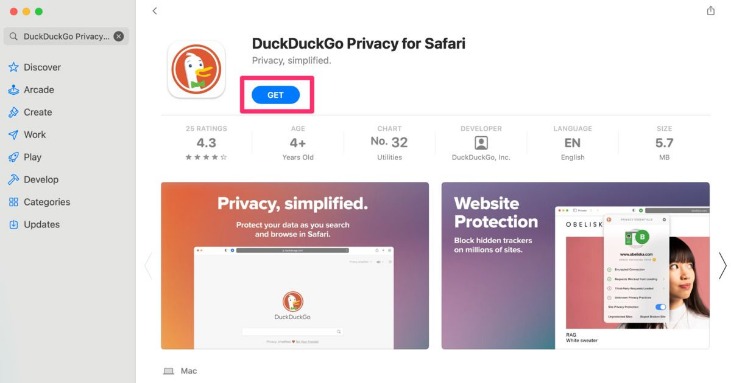
This setup ensures that your searches are not logged or personalized, reducing the risk of tracking even before you enter the Dark Web. By default, the Tor Browser comes pre-configured with DuckDuckGo as one of its search options. DuckDuckGo, on the other hand, ensures that all searches remain private – regardless of whether you’re in incognito mode or not. However, it aggregates results from multiple sources (Wikipedia, Bing, Yahoo) rather than relying on a single index, making it less biased than Google’s personalized search model. While DuckDuckGo does not track users, it does not make you fully anonymous. This means you’re less likely to be stuck in a “filter bubble” where your results are shaped by previous searches, location, or browsing behavior.
These typically come with ".onion" after them, rather than something like ".com" as on the standard web. Cybersecurity has to also cover everything physically on your computer too—which law enforcement or government authorities might have the right to seize if they come calling. Bear in mind too, that your internet provider will be able to see you connecting to Tor nodes, even if it doesn't know exactly what you're doing. Even with Tor and onion routing in place though, you're not suddenly completely invisible and free to do whatever you want, without repercussions. It blocks trackers, prevents user fingerprinting, encrypts data, and reroutes your browsing so no one can see where in the world you are.