
As you might expect, these websites sometimes host explicit, gory, harmful, and illegal content. If you need to access dark web networks, be careful to avoid online scams and illegal schemes. In the internet's darkest corners, a myriad of hidden websites cater to an array of needs and interests.
The dark web, an even more puzzling sublayer, exists within this hidden world. But lurking beneath lies the expansive, mysterious “deep web” or“dark net” – the gigantic submerged part that remains invisible to standard searches. On the internet, Google’s reach barely scratches the surface. Additionally, if Tor leaks, your IP address will be exposed to everyone. While the Tor Browser is designed to protect your privacy, it’s not 100% safe on its own. I recommend using the Tor Browser with a good VPN for an extra layer of privacy and security.
These pages come with extra protections for user anonymity and data security, and you need special software to access them—you can't get at them through your normal web browser, like you can with much of the rest of the deep web. It's a place where you'll find data leaks and illegal trades, but also legitimate, legal online activities users want to carry out without attracting the attention of law enforcement agencies or governments. This part of the internet is notorious for illegal activities, facilitated by the anonymity it offers.
How To Get A Cybersecurity Job As A Fresher? Tips And Career Roadmap
- The “Hidden Wiki” (which can be accessed in a normal browser) offers a large collection of dark web links, but be careful, as many of those links are to dangerous websites.
- Some of the websites to look out for on the dark web include mirrors of both the BBC and the ProPublica investigative journalism platforms, built to help inform people who are living in countries where the internet is heavily censored.
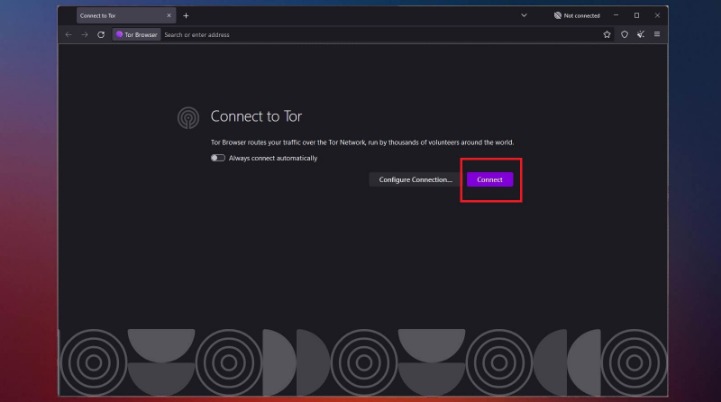
- Upon launching Tor Browser, it will automatically connect to the Tor network.
- These can all also make use of Tor’s anonymity features.
It routes traffic through service nodes operated by stakers in the network, creating a decentralized onion routing system that hides your IP and traffic. Other privacy networks like I2P, Lokinet, and Freenet offer different layers of security and anonymity. A VPN adds protection before Tor, closing these gaps without breaking access to .onion sites.
Because it’s easier to contain malware in a virtual environment, which can be fully controlled. If the signal goes through the Tor network first, your ISP will be able to see that you are attempting to connect to a Tor node. Because it’s not as safe as Tor over VPN. Well, VPN over Tor is basically its opposite – instead of going through the VPN first, the signal passes through the Tor network, before going through the VPN. Not very safe, but it’s still useable.
Step 4: Access I2P Sites (Eepsites)
Always double-check and cross verify before you visit an onion link. On the surface web, if you want to find something, you can simply use a search engine to look for it. You want to be sure that your VPN is working and not leaking your real IP address.
How It Works: Tor Over VPN
It is also a good idea to use full-disk encryption utilities like VeraCrypt which can protect your data even if your device is hacked or stolen. You can use third-party tools like Bleach Bit to completely wipe temporary files if you want to go the extra mile for security. You can use Bitcoin mixers to make your tokens anonymous, but doing so is quite costly and requires trusting third-party actors who cannot be traced. Things like blockchain analytics, cookie tracking, connected nodes, and address reuse can make it possible for people to track your transactions.
Rule No.41 allows a federal judge to issue a search and seize warrant for any person who is using anonymity software like Tor. As mentioned before, your ISP and government institutions are not able to see what sites you visit on the Tor network, but they can probably see that you use Tor. You can look for information on /r/deepweb, /r/TOR, or /r/onions, of which the latter is useful to find hidden wikis and more. However, there are several “.onion” search engines like “onion.city”, “onion.to”, and “notevil” that you can use to find suitable marketplaces. Be warned that this may cause some websites to not work properly.
Browsing Dark Web Domains On Tor
There are several ways to protect your online activities from being tracked. All data is routed from the exit node through a secure VPN connection. Your ISP won’t be able to see your Tor network activity. This means that all of your traffic, including your Tor Browser activity, is protected. However, be careful when using the Tor Browser to access the dark web.
WANT TO TRY THE TOP VPN RISK FREE?
The dark web hosts a wide spectrum of content, from secure communication tools for journalists to illegal marketplaces selling illicit goods. The dark web is a small but unique part of the internet that can provide anonymous browsing, communication, and other accessibility. That’s why users have to look for links on “dark web aggregate” sites or wikis where darknet admins and users shared links for others to use.
- If you decide to enter the dark web, always make sure to take all the necessary online privacy precautions.
- Even when using security measures and your common sense, accessing deep web content still poses a risk.
- Your ISP only sees the encrypted VPN traffic and won’t know you’re on Tor.
- Reddit is also a valuable resource for finding the dark net or deep website you’re looking for.
- If you need academic journals, check out our article on using deep web search engines for academic and scholarly research.
Ethical Considerations And Risks
Now that you understand the essentials of anonymous networks and how to prepare yourself for secure browsing, it’s time to explore the practical steps involved in accessing the Dark Web. By familiarizing yourself with these networks and protocols, you gain a clearer understanding of the diverse strategies people use to stay hidden online. Instead of simply routing traffic, Freenet stores encrypted chunks of data across nodes. This “onion” routing masks your IP address and encrypts your data multiple times, peeling away layers of encryption at each relay. While it’s true that some corners harbor illegal activities, it also provides a platform for whistleblowers, journalists, activists, and everyday users seeking privacy and freedom from censorship.
While this isn’t an issue for most of the trip (since each relay only has access to the previous and next relays in the network), it is an issue with the exit node. Since each node server in the Tor network is volunteer-operated, you never know who operates the relays that your data is traveling through. While the Tor Browser and the Onion Network are an excellent way to protect your online privacy and anonymity, it is by no means a perfect solution, and it has a few weaknesses. In an onion network, messages are encased in layers of encryption, much like the layers of an onion. All Tor Browser data is encrypted and relayed three times over the Onion Router network, which is composed of thousands of volunteer-run servers, which are known as Tor relays.
Dark web marketplaces are websites where you can exchange illicit goods and services like stolen credit cards, account login credentials, counterfeit items, drugs, and other items. There are thousands of websites on the dark web, many—but not all—of which are illicit marketplaces selling stolen personal data. Users upload encrypted files or websites (“freesites”) that get cached and shared across the network. Freenet is a distributed anonymous datastore for static ‘freesites’ and files that are cached and shared across nodes. However, its network is still small, and there aren’t many hidden services available yet. Lokinet is easier to set up than I2P, and it may run faster than Tor in some cases, especially when visiting regular websites through its secure network.
The Tor Browser is the safest and most trusted way to access the dark web. By following some basic security tips and using the right tools, you can greatly reduce your chances of running into trouble. While the dark web comes with risks, it’s possible to explore safely if you take the right precautions. You can download the VPN app from the provider’s official website or your device’s app store.
You can’t search for .onion sites using Google. These websites use special encryption protocols and are accessible only through anonymizing tools like the Tor Browser. As noted by Andy Greenberg at Wired, while the deep web makes up approximately 90% of the internet, the dark web makes up only around 0.1% and is designed to provide anonymity for users and site owners. All applications are automatically blocked if they try to access the internet without using Tor, Persistent Storage is encrypted by default, and as mentioned above, nothing is ever written to the computer’s hard drive. This includes evidence of any websites you visit, files you open, passwords you use, and even any other devices or networks you connect to.
If you’ve ever checked your medical results online through a portal that required a login, you were navigating the deep web. But even though it seems like there’s a lot out there, this only makes up about 4% of the entire internet. This is where all the cat videos and trending YouTube songs live, easy to find and access. Dark web, deep web, clear web – it’s confusing.