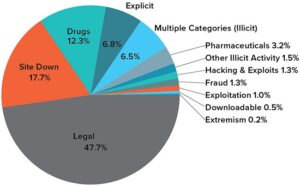
Many dark internet users favor Tor which uses a network architecture originally developed by the U.S. The dark web is a small, hidden subset of the deep web that requires special tools to access. Estimates suggest around 43% of dark web content and activity is legal, but finding it requires a specialized dark web search engine. DuckDuckGo is a privacy focused search engine that you can use on the dark web via its Tor hidden service onion address. To reach the dark web, you must use Tor and then a dark web search engine or directory to find addresses. We’ve covered how tools like Ahmia and DuckDuckGo’s onion service keep things clean and private, while veterans like Torch and Haystak offer deep access with caution.
Deep Search

Engines like Ahmia and Torch update their results regularly, which means you are more likely to find working and safe links. They are simple to use and give newcomers a direct way to reach dark web sites. These lists provide collections of onion addresses organized by category. Always double-check onion addresses, avoid unknown engines, and never download files you do not trust.
It is a hub for black markets where criminals trade illegal goods and services, such as drugs, weapons, counterfeit currency, and stolen data. The most common method to access the dark web is through the Tor network, which uses the Tor Browser. On the other hand, the dark web is a subset of the deep web that requires special software to access.
These search engines are systems that list onion links from the deep web, the main task of each search engine is to allow the display of hidden pages. The deep web includes all websites and pages that are not indexed by search engines and are not publicly accessible. Unlike many dark web search engines, NotEvil prioritizes user privacy by not storing your search queries or personal data. Dark web search engines are the gatekeepers to the Tor network’s hidden corners, empowering users to explore what’s intentionally unindexed. Active since around 2019, Torlinks is a directory-style tool that complements dark web search engines by offering a curated index of V3 .onion links.

Verify All onion Links
Can you access a website with the .onion domain name through a regular browser like Google Chrome? If you try clicking on these links, you’ll get an error message that the site is inaccessible. Some visitors simply enjoy the anonymity and might just join an online chess club there or Blackbook, the social networking site exclusively for the dark web.

In-Depth Breakdown Of Top Dark Web Search Engines
Ahmia has an easy and clean User Interface that looks like any other search engine. Ahmia is indeed a great place to start for new dark web users for many reasons. Regular browsers like Chrome or Safari can’t access encrypted dark web sites.
- Active since around 2019, Torlinks is a directory-style tool that complements dark web search engines by offering a curated index of V3 .onion links.
- This hidden layer of the internet is much larger than what most people think and offers rich resources to those who know how to navigate it safely.
- Before diving into your research, confirm that the search engine you plan to use supports Tor’s protocols.
- Part of what makes the dark web the dark web is that you can't access it through your normal web browser, nor can you look something up on it via a Google search.
AI-Driven Search And Personalization

Even the regular search engine offers more deep web content than Google. No, for that, you need to use one of these specialized deep search engine tools. There is a whole world of content hiding on the so-called "Invisible Web," the part of the internet that does not appear in search results or web directories. While no search engine can cover the entire dark web due to its decentralized and ever-changing nature, Haystak is a top choice for exploring its hidden content.
Directory Of Open Access Journals

Torch’s longevity and massive database cement its status as a dark web staple, but its unrefined nature demands caution. It boasts one of the largest .onion indexes, claiming over a billion pages, covering forums, blogs, marketplaces, and dubious services. I pair it with Torch or Haystak for broader queries, but for journalists or researchers needing a clean, trustworthy starting point, Ahmia is unmatched. I’ve avoided countless dark web traps thanks to its filtering, but the smaller index frustrates me when researching niche topics. Ahmia is my default for professional work, especially when digging into sensitive topics like whistleblower platforms or cybersecurity leaks.
Myth 1: The Dark Web Is Only Used For Illegal Activities

However, accessing these shady corners must be done carefully and legally. During a penetration test or security assessment, testers often check dark web sources for leaked passwords, company mentions, or selling of exploits. For cybersecurity professionals like penetration testers, threat intel analysts, dark web reconnaissance has become a standard part of the job. They help you access threat intelligence on the dark web leaked accounts, hacker chatter, etc. without exposing yourself to unnecessary risk.
Dark Web Websites
TorBook aims to be a privacy-focused alternative to mainstream social networks. This service helps protect your primary email when signing up for .onion services. I found their technical explanations clear and well-researched, though the site updates less frequently than other news platforms. I found its reporting on security issues and dark web developments particularly valuable for staying informed about online privacy matters. My testing showed it loads quickly and offers the same high-quality content as its regular website, making it an excellent resource for readers in censored regions. ProPublica provides Pulitzer Prize-winning uncensored investigative journalism through its .onion service.
Search engines like Torch offer dynamic, broad results for in-depth queries but with higher risks of irrelevant or harmful content. Trends like trust metrics and mobile optimization will enhance usability, but regulatory pressures may increase ethical moderation. By 2030, expect AI-driven filtering for better spam detection (e.g., evolving from Haystak’s machine learning), multi-network support (Tor + I2P), and decentralized indexing via blockchain for resilience.
TorDex is an unfiltered dark web search engine that allows users to suggest new .onion websites. Using an uncensored dark web search engine can expose users to substantial risks, including malware, scam sites, and illegal content. Like the other dark web search engines, Candle doesn't track user activity or store data, giving users peace of mind about their online activities and anonymity. Not Evil is a popular dark web search engine recognized for its extensive database of “clean” .onion sites that don’t contain illegal content.